

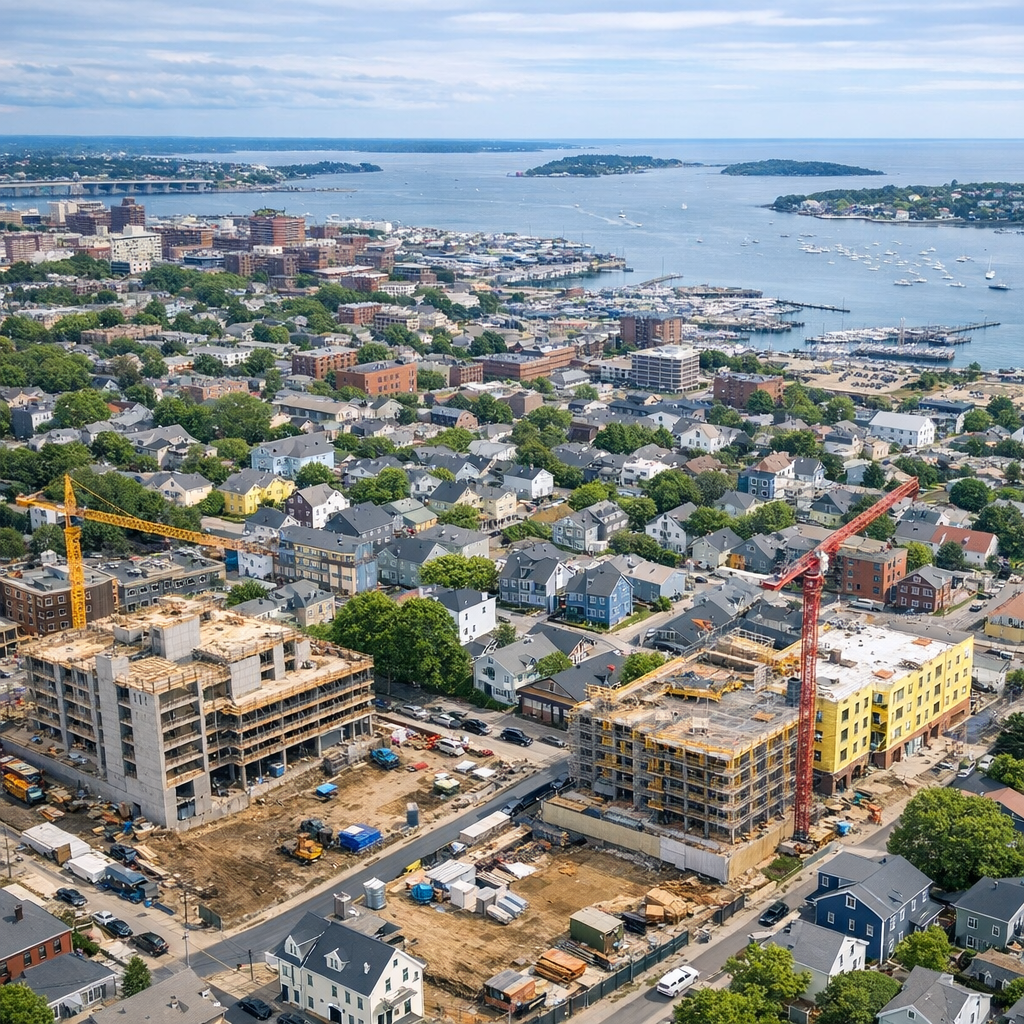
Portland’s housing market is experiencing notable shifts, influenced by various factors including market trends, new developments, and policy changes. Understanding these dynamics is crucial for residents, prospective homebuyers, and investors.
Market Trends
Recent data indicates a slight decrease in home values. As of March 31, 2026, the average home value in Portland was $557,760, reflecting a 0.5% decline over the past year. Homes are typically going pending in around 17 days, suggesting a still-active market. The median sale price stood at $520,889, with a median list price of $562,267. Notably, 25.5% of sales were over the list price, while 60.3% were under, highlighting a balanced negotiation landscape.
Development Projects
Several significant development projects are underway, aiming to address housing needs and revitalize communities:
89 Elm Apartments
Construction has commenced on 89 Elm Apartments, a 201-unit affordable housing development in downtown Portland. This project will offer a mix of studio, one-, and two-bedroom apartments for households earning up to 60% of the area median income. Amenities include a community room, fitness center, and social services office. Completion is expected in 2027.
Lambert Woods North
In the North Deering neighborhood, Lambert Woods North is set to provide 72 affordable family housing units. Designed to meet the U.S. Department of Energy’s Zero Energy Ready standard, the development will feature one-, two-, and three-bedroom apartments reserved for households earning 60% of the area median income. Seven units are designated for referrals from the city’s homeless shelter.
Rock Row
Rock Row is a transformative 110-acre mixed-use development centered around a 26-acre natural rock quarry. The project includes 1,200 modern apartment and townhouse residences, 300,000 square feet of retail and dining space, and a 120,000-square-foot health and innovation campus. This development aims to create a vibrant community hub in Greater Portland.
Affordability and Community Impact
Despite these developments, affordability remains a pressing concern. Rising home insurance costs are contributing to the challenge. As of December 2025, insurance expenses comprised 5.9% of the average mortgage payment in the Portland metro area, up from 4.2% five years prior. This increase is attributed to more frequent natural disasters and higher rebuilding costs, making homeownership less attainable for many residents.
Additionally, the city is facing a reduction in shelter beds due to budget shortfalls. Over 1,000 shelter beds are set to be eliminated, impacting facilities such as the Bybee Lakes Hope Center and Laurelwood Center. This reduction poses significant challenges for Portland’s homeless population and contradicts efforts to end unsheltered homelessness by increasing shelter capacity.
In response to these challenges, initiatives like the Williams & Russell Project aim to revitalize historically Black neighborhoods. This $120 million redevelopment seeks to address past displacements by creating housing and business opportunities for the Black community, particularly those with familial ties to the area.
As Portland continues to evolve, staying informed about these developments and their implications is essential for all community members.