

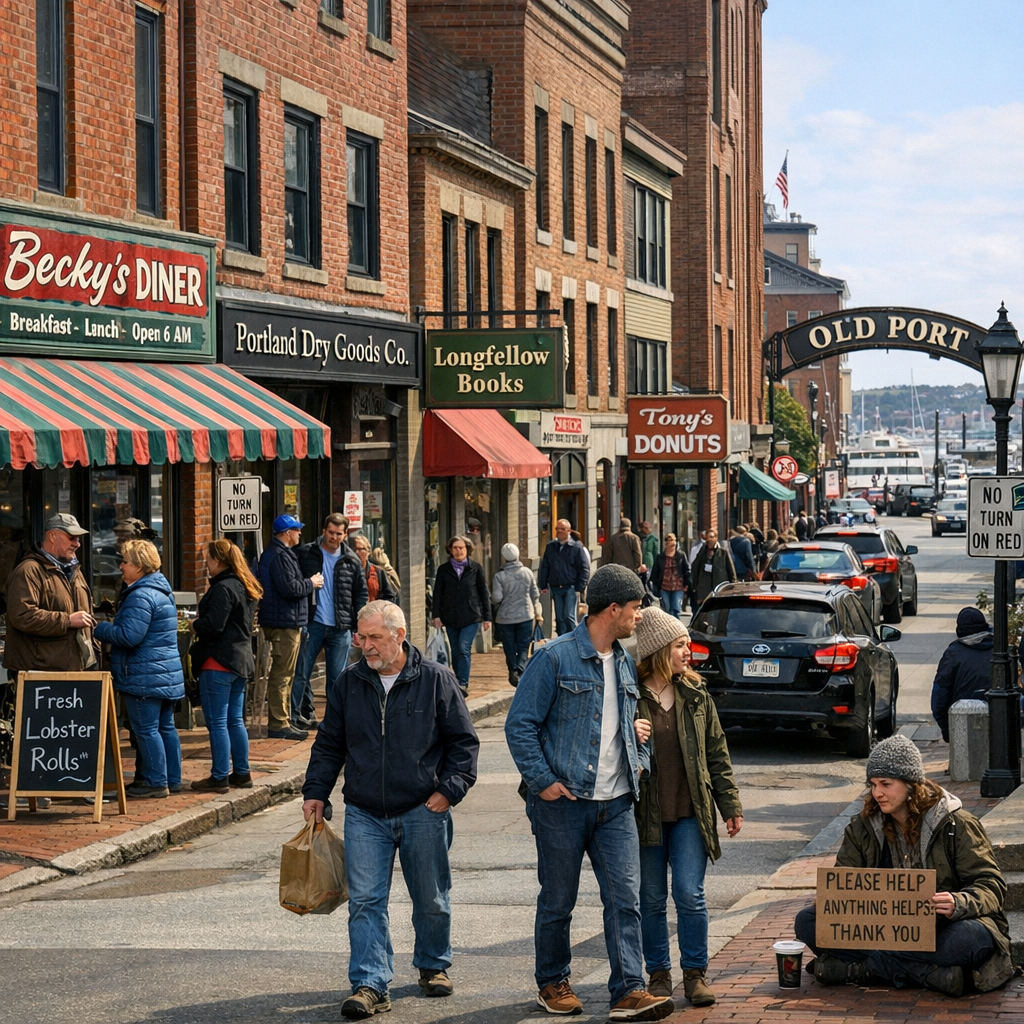
As the United States grapples with rising inflation and evolving political dynamics, understanding the broader economic landscape becomes crucial for communities like Portland, Maine.
Inflation and Economic Indicators
Recent reports indicate a surge in inflation, with rates reaching 3.8% in April. This uptick is largely attributed to ongoing geopolitical tensions, notably the conflict in the Middle East, which has disrupted energy markets and trade routes. Consequently, gas prices have soared above $4.50 per gallon, placing additional financial strain on households. For the first time in three years, wage growth has lagged behind inflation, diminishing purchasing power and leading many Americans to rely more heavily on credit. Consumer sentiment has also declined, reflecting growing economic pessimism. Source
Political Landscape and Economic Policies
In response to these economic challenges, the current administration has emphasized policies such as tax cuts, deregulation, and energy independence. However, public approval of the administration’s economic performance has declined, with a recent poll indicating a 70% disapproval rate. This sentiment underscores the political risks associated with economic instability. Source
Implications for Portland, Maine
For residents of Portland, these national trends have tangible local effects. Increased fuel costs can lead to higher prices for goods and services, affecting both consumers and businesses. The decline in consumer confidence may result in reduced spending, impacting local retailers and service providers. Additionally, the political climate and economic policies at the federal level can influence state and local initiatives, shaping the economic environment in Maine.
Staying informed about these developments is essential for navigating the complexities of the current economic landscape. By understanding the interplay between national policies and local realities, Portland residents can better prepare for and adapt to the challenges ahead.