

By Olivia Smith
Affordable Housing Pressure and Policy Reassessment
Portland is facing a growing squeeze: the city’s inclusionary zoning policy, adopted via the Green New Deal ordinance, now requires that 25% of units in new housing developments be affordable to households at or below 80% of area median income. What was intended to increase access has raised concerns among developers and city leaders that the rules may be slowing down overall housing production. Projects triggering the zoning rules have dropped sharply while promised units are lagging, and the city is now considering scaling back portions of the policy. The heart of the issue: balancing affordability without creating insurmountable barriers to new developments.
Middle-Income Households Left Out
Amid these debates, Portland’s housing market is offering near-zero relief for middle-income residents. Most homes currently available on the market are well above what typical area incomes can support—meaning even households that don’t qualify for public assistance still struggle to find homes in range. While tens of millions have been allocated toward affordable units and housing initiatives, the pace of production still falls short of the growing demand.
Transportation Safety and Street Design Updates
On the transit and transportation front, Portland has launched a couple of major initiatives aimed at improving mobility and safety across the city. The Maine Department of Transportation’s “Portland West Balanced Mobility Improvements Study” is underway to tackle congestion and improve connections among Scarborough, South Portland, Westbrook, Gorham, and adjacent areas. Proposed improvements focus on multimodal travel—making walking and biking safer, expanding transit options, and better signal timing. Public participation is central, with drop-in and virtual meetings scheduled this fall to guide the alternatives being considered.
Libbytown Streets Getting a New Look
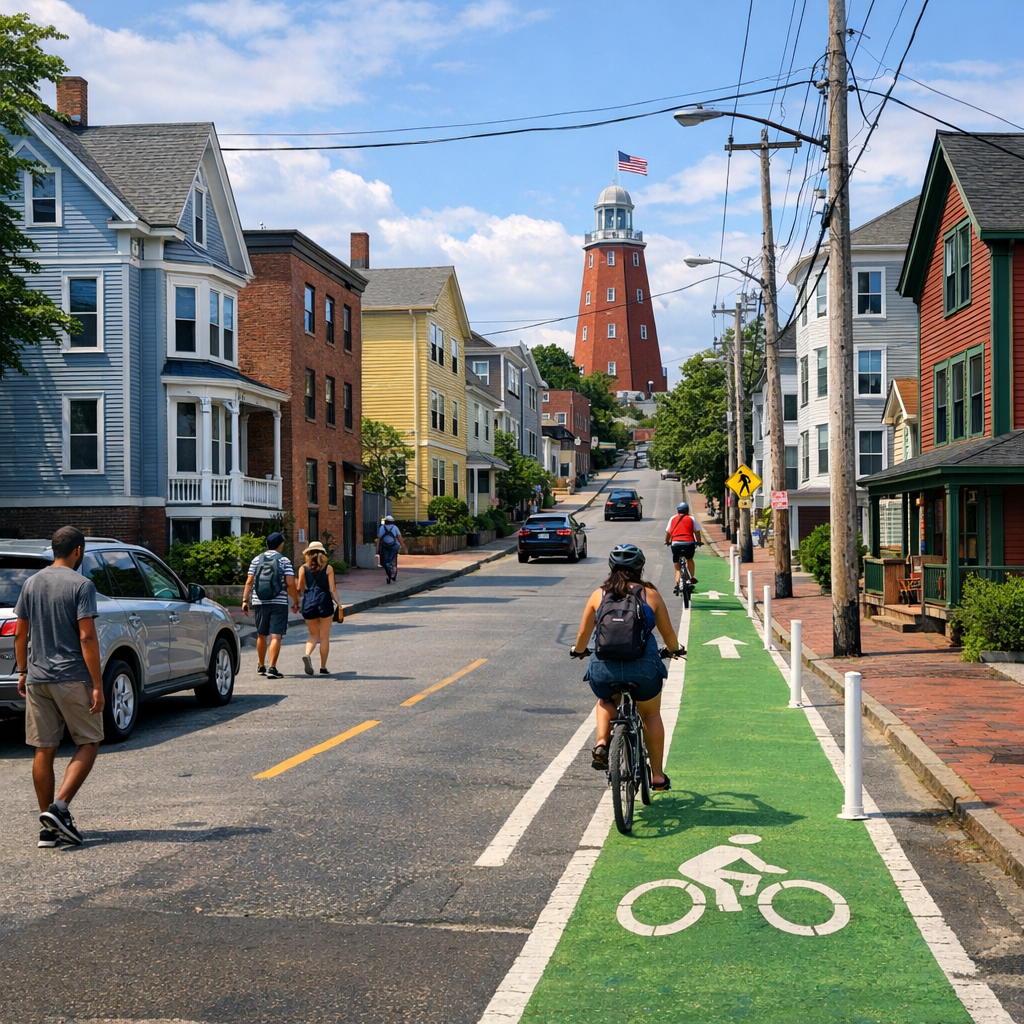
The “Reconnecting Our Villages” project is poised to reshape Libbytown’s road layout by converting key streets from one-way to two-way traffic, adding cycle tracks, improving sidewalks, enhancing crosswalks, and upgrading transit stops. The plan includes a modern roundabout at the intersection of Congress Street and Park Avenue. Construction is slated to begin in 2026 and wrap up by 2028.
Vision Zero and Traffic Enforcement
Correlated with these design changes, Portland’s Vision Zero commitment aims to eliminate traffic deaths by 2040. Recently, the Portland Police Department undertook enhanced enforcement operations targeting dangerous driving behaviors at locations where crashes or speeding have been chronic problems. Advocates are also pushing for lower speed limits, automatic walk signals, and safer intersections as part of a broader push for walk-and bike-friendly infrastructure.
Neighborhood Impact and Community Voices
These intertwined efforts—more housing scrutiny, redesign of streets, safety enforcement—are reshaping neighborhoods. Areas such as Libbytown are poised for significant change in their built environment. As the inclusionary zoning policy evolves, some development projects already in the pipeline may change scope or affordability mix. Residents are watching closely, especially in neighborhoods that may be most affected by redevelopment pressures, rising rents, or altered traffic patterns.
Overall, Portland stands at a crossroads. The city must meet urgent needs for affordable housing while promoting street safety and equitable access. How these policies are balanced will impact how—and whether—Portland remains an affordable, walkable, and livable city for its many kinds of residents.