

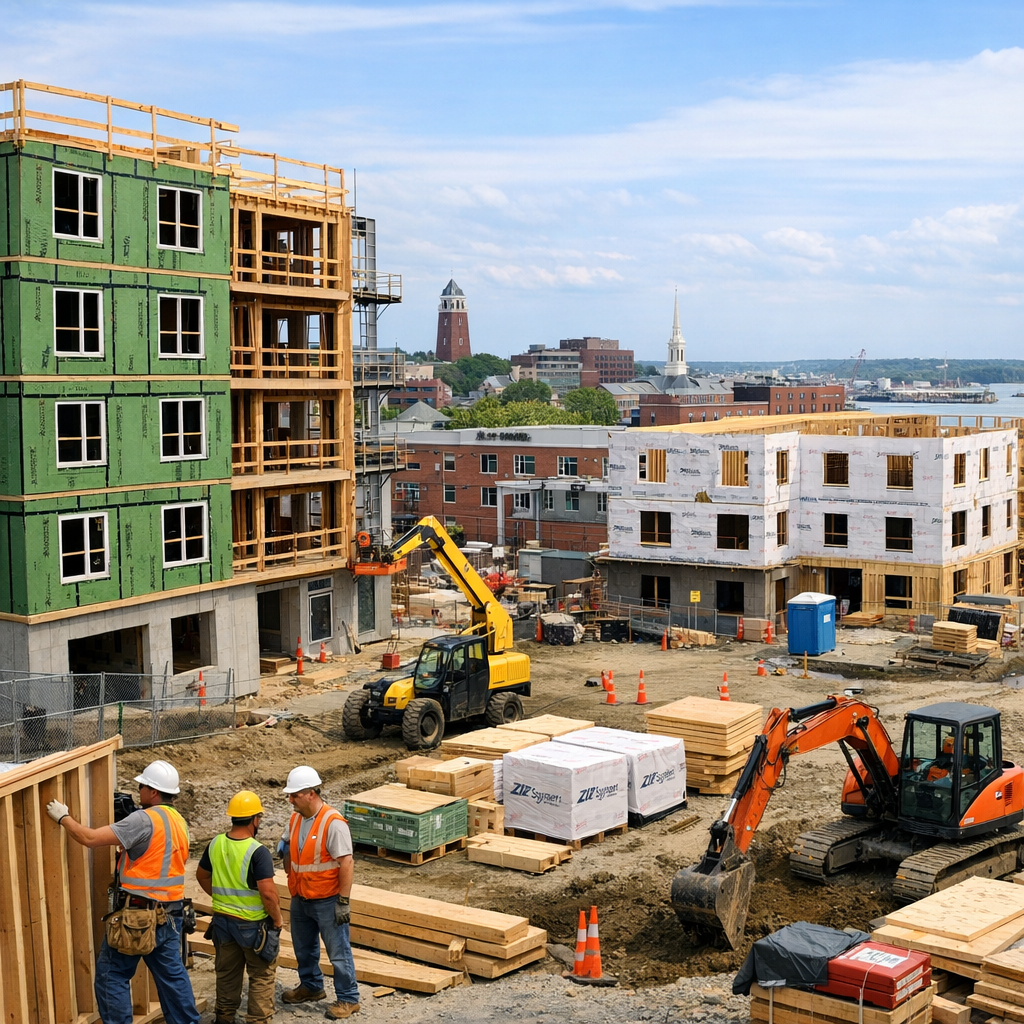
Portland’s housing market in 2026 is evolving — though not rapidly. Prices for home sales have softened slightly, rental costs remain steep, and local development is increasingly focused on affordable options. Whether you’re looking to buy, rent, or just stay informed, here’s a snapshot of what’s happening.
Home Prices & Buyer Demand
The median sale price of homes in Portland is around $533,500, a modest year-over-year increase of about 0.8%. Meanwhile, the number of active listings has dropped to approximately 2,320, down nearly 9%, putting more pressure on buyers seeking options. Homes are also spending slightly more time on the market—median days on market has risen to about 48 days. All told, these figures indicate a slight cooling from the heated years past. Data via Redfin mid-year 2026.
Rental Market Remains Tight
Rental costs in Portland are among the highest in Maine. The average rent hovers around $2,400 per month, marking about an 8% increase from last year. Inventory for rentals has grown sharply, with over 100 rentals listed recently, but demand continues to outpace supply—especially for affordable and smaller units.
Key New & Planned Housing Projects
Several large developments are underway aimed at easing the housing crunch, particularly for lower- and middle-income residents:
- The Bayside Master Development Plan proposes more than 800 new rental units, including over 200 affordable homes, alongside green spaces, commercial space, and pedestrian improvements.
- The COMB Block Redevelopment in East Bayside will replace aging buildings with three new structures, offering affordable units along with mixed-income housing, improved access, and green courtyards.
- At 879 Congress Street, Portland Housing Development Corporation gained approval for a seven-story building offering 54 affordable one-bedroom units plus ground-floor retail—targeted toward tenants earning 30–80% of area median income. Work may begin in late 2027, with completion aimed around 2030.
What Renters & Buyers Should Know
Buyers are in a clearer position than in recent years. With slowing price growth and somewhat lower competition, there may be room to negotiate—especially in less central neighborhoods. Preapproval and flexibility tend to help.
Renters face high monthly costs. To find more affordable or smaller spaces, consider neighborhoods farther from downtown or move into developments with inclusionary zoning or income-restricted rents.
Policy & Planning Voices
Local policymakers are responding with new tools. Zoning reforms aimed at enabling more “middle housing”—duplexes, four-plexes, accessory dwelling units—alongside city financing, tax incentives, and state investments are increasingly central to planning discussions. Challenges remain: rising construction costs, regulatory requirements, and delays in securing funding can slow down promising projects.
Portland still faces affordability gaps, especially for modest-income households, but ongoing development and increasing policy attention offer reason for optimism.