

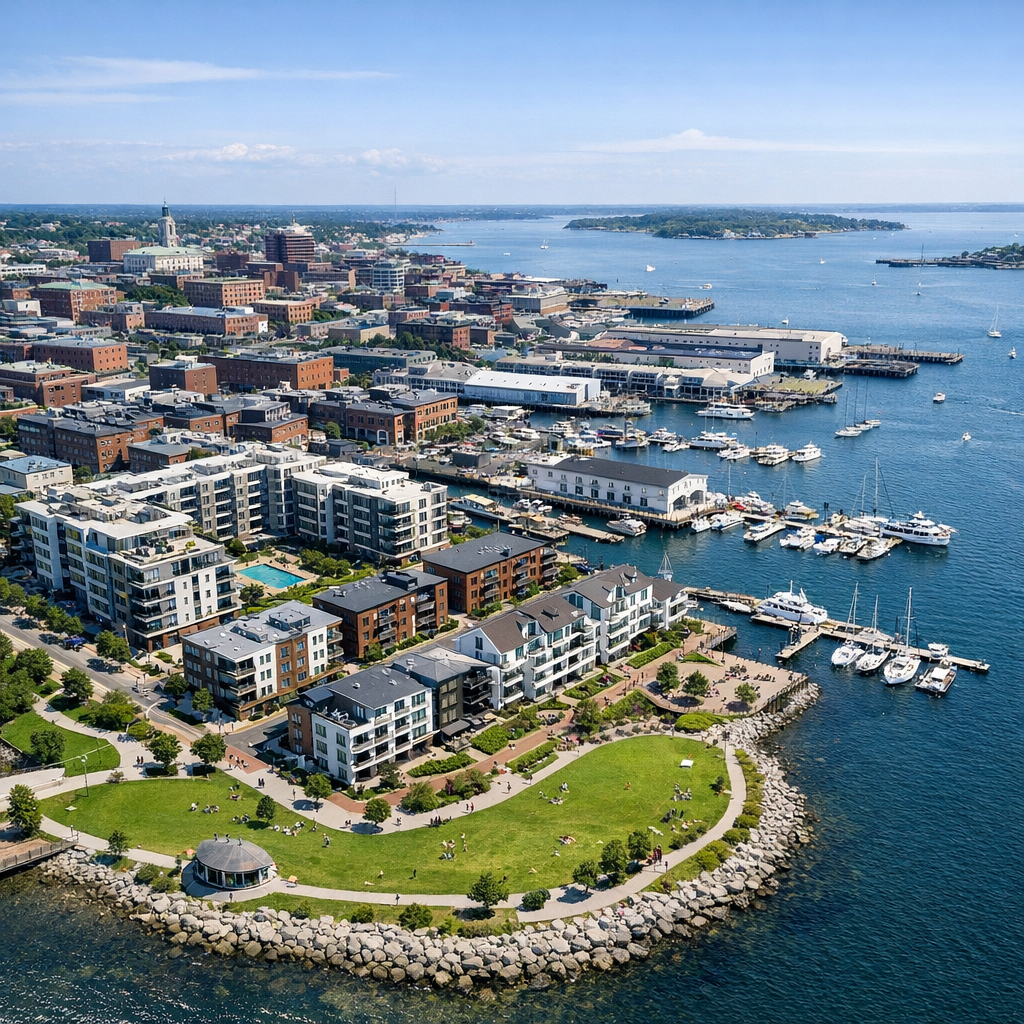
Portland’s housing market is experiencing notable shifts, influenced by rising home prices, new development projects, and innovative housing solutions aimed at addressing affordability challenges.
Current Market Trends
As of March 2026, the median sale price for homes in Portland reached $594,000, marking a 10.9% increase from the previous year. Homes are selling faster, with an average of 38 days on the market, down from 50 days last year. Despite the higher prices, demand remains strong, with homes selling at 100.76% of the asking price. However, inventory is tight, with only 125 homes available in March 2026, reflecting a slight year-over-year increase of 0.02%.
Development Projects
Several significant development projects are underway to address housing needs:
Portland Foreside
This 10-acre waterfront neighborhood is being revitalized to include 500 new homes, 60% open space, and 150 boat slips. The development aims to create a vibrant community with a mix of residential and commercial spaces.
Rock Row
Located in nearby Westbrook, Rock Row is a transformative 110-acre mixed-use destination centered around a 26-acre natural rock quarry. The project plans to offer 1,200 modern apartment and townhouse residences, along with retail, office spaces, and entertainment venues.
89 Elm Apartments
Construction has begun on a 201-unit affordable housing development in downtown Portland. The project will provide homes for households earning up to 60% of the area median income, featuring a mix of studio, one-, and two-bedroom apartments.
Middle Housing Initiatives
To address the housing shortage, Portland has been promoting “middle housing”—including duplexes, fourplexes, accessory dwelling units, and cottage clusters. Since the adoption of the Residential Infill Project in 2021, approximately 23% of new homes (about 4,067 units) have been classified as middle housing. This initiative aims to increase housing density and affordability within the city.
Despite these efforts, recent data indicates a slowdown in overall housing construction, attributed to economic challenges such as high interest rates, inflation, and limited financing options. Nevertheless, local real estate agents report ongoing demand for middle housing, and city officials remain committed to expanding housing options to meet the needs of Portland’s residents.
As Portland continues to evolve, staying informed about market trends and development projects is essential for prospective homebuyers, renters, and investors navigating the city’s dynamic housing landscape.