

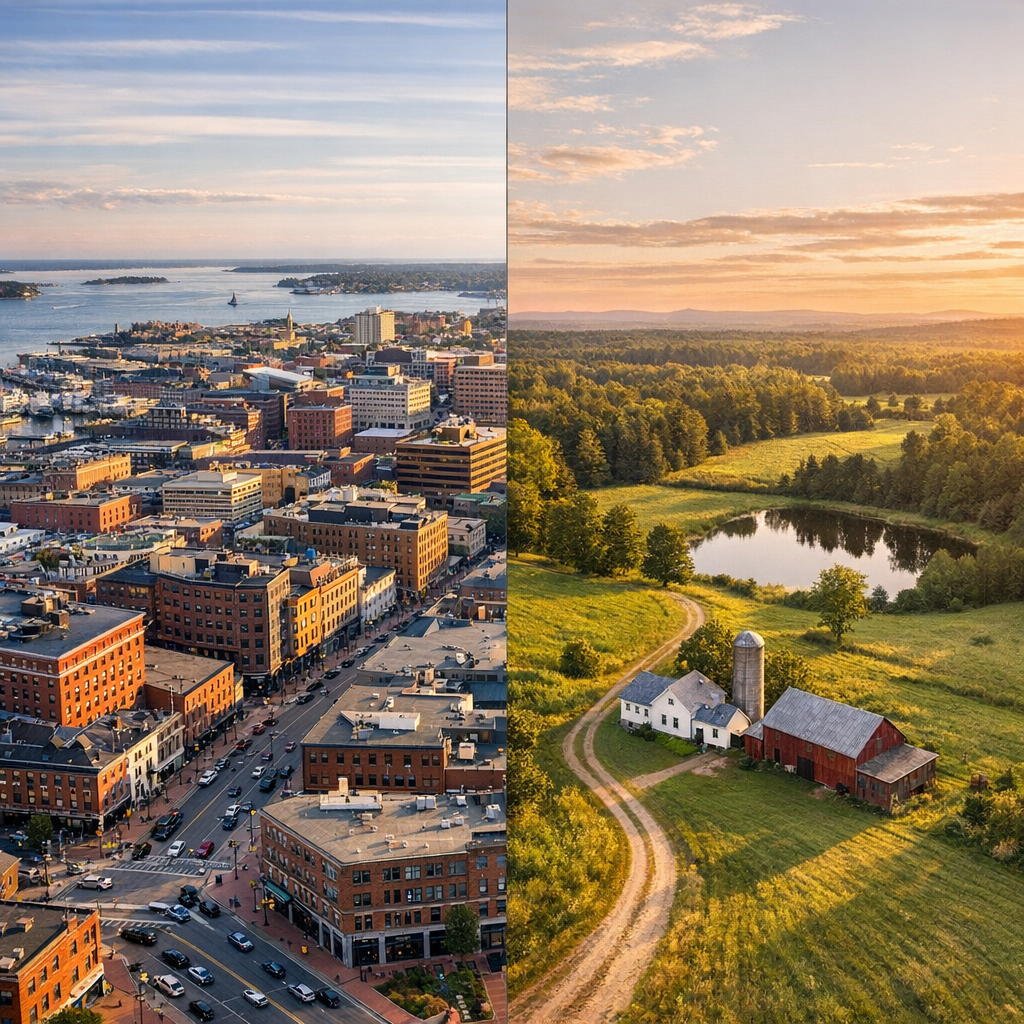
Portland’s economy has experienced significant growth over the past two decades, contrasting sharply with the stagnation observed in rural parts of Maine. This divergence underscores a widening economic divide within the state.
Portland’s Economic Surge
Since 2001, the Portland metropolitan area’s per-capita gross domestic product (GDP) has increased by nearly 40%. This growth is attributed to a robust labor market, strategic public policy decisions, and a concentration of industries that have thrived in the urban environment.
Rural Maine’s Economic Stagnation
In contrast, regions in western and northeastern Maine have seen little to no economic growth during the same period. Factors contributing to this stagnation include lower labor force participation rates and limited access to economic opportunities.
Contributing Factors
The disparity is influenced by several elements:
- Labor Force Participation: Rural areas report lower engagement in the workforce, often due to health issues and limited job availability.
- Public Policy: Economic policies have historically favored urban development, leading to concentrated growth in cities like Portland.
- Industry Distribution: Urban centers attract diverse industries, while rural areas may rely on a limited number of sectors, making them vulnerable to economic shifts.
Implications and Future Outlook
The growing economic divide poses challenges for statewide economic cohesion and equitable development. Addressing this issue requires targeted policies aimed at revitalizing rural economies, improving healthcare access, and creating job opportunities to encourage labor force participation.
As Portland continues to thrive, it’s imperative for policymakers and community leaders to collaborate on strategies that promote balanced growth across all regions of Maine, ensuring that prosperity is shared statewide.