

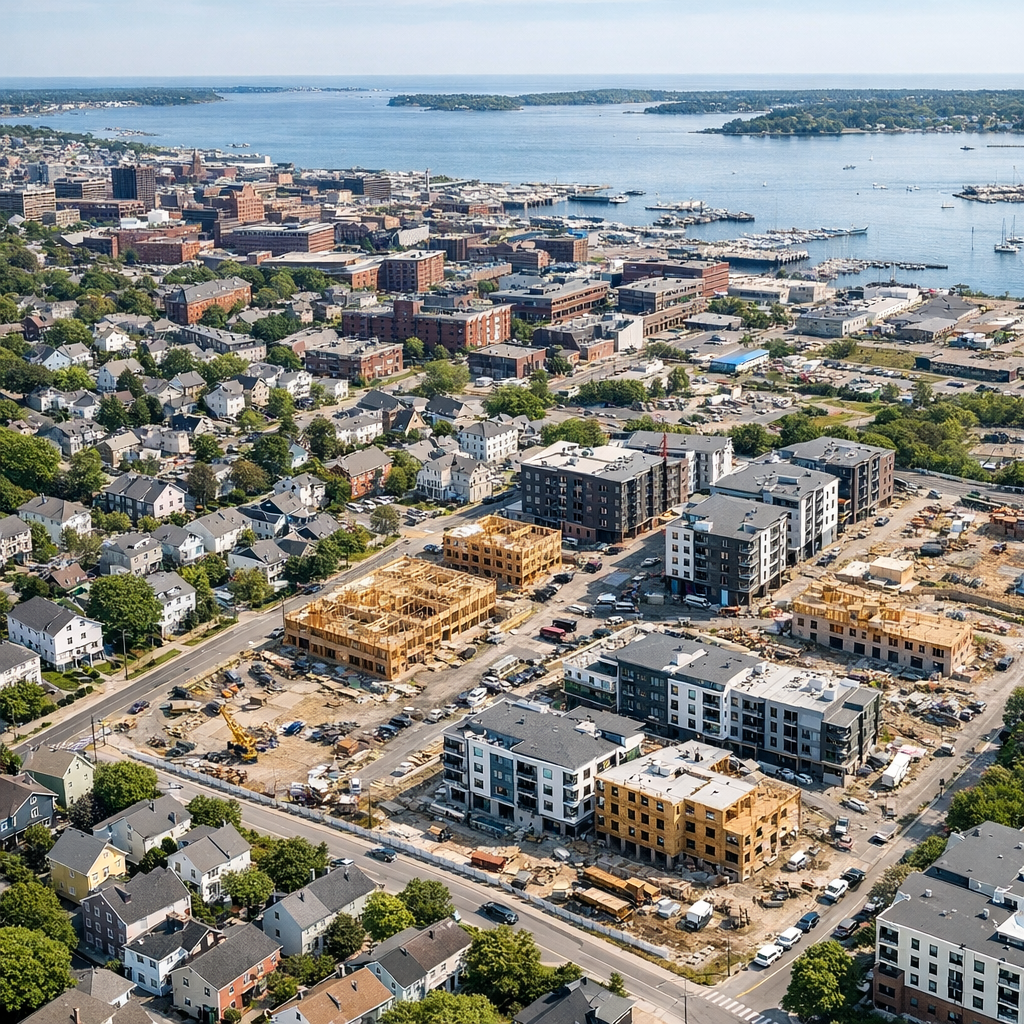
Portland’s housing market is experiencing notable shifts, influenced by rising home prices, limited inventory, and innovative development projects aimed at addressing affordability and inclusivity.
Current Market Trends
As of March 2026, the median sale price for homes in Portland reached $594,000, marking a 10.9% increase from the previous year. Homes are selling faster, with an average of 38 days on the market compared to 50 days last year. Despite this uptick in sales, inventory remains tight, with only 2.1 months of available supply, contributing to competitive conditions for buyers.
Development Initiatives
Several development projects are underway to alleviate housing shortages and promote inclusivity:
Bayside Master Development Plan
Approved by the City of Portland’s Planning Board, this plan proposes over 800 new rental units, mixed-use community spaces, and increased green areas in the Bayside neighborhood. The project aims to enhance pedestrian access and connectivity, fostering a vibrant community atmosphere.
Equality Commons
Set to open in summer 2026, Equality Commons will be Maine’s first affordable senior housing community with supportive services for LGBTQ+ older adults. Located at 25 Casco Street, adjacent to the Equality Community Center, the 54-unit complex addresses the pressing need for inclusive, affordable housing for seniors.
Rock Row
In nearby Westbrook, the Rock Row development is transforming a 110-acre site into a mixed-use destination featuring retail spaces, modern offices, residences, hotels, and entertainment venues. Centered around a 26-acre natural rock quarry, Rock Row aims to become an economic anchor for the region.
Middle Housing Initiatives
Portland has been recognized for promoting “middle housing”—including duplexes, fourplexes, accessory dwelling units, and cottage clusters—to address its housing shortage. Since the 2021 adoption of the Residential Infill Project (RIP), which relaxed zoning laws to encourage denser development, around 23% of new homes (about 4,067 units) have been classified as middle housing. However, recent data indicates a sharp decline in overall housing construction, attributed to economic challenges such as high interest rates, inflation, tariffs, and restricted financing. Despite this slowdown, local realtors report ongoing demand for middle housing. Mayor Keith Wilson has set an ambitious goal of adding 20,000 housing units over the next eight years, with expectations that middle housing will play a central role in meeting this target.
As Portland continues to evolve, these developments and initiatives reflect a concerted effort to balance growth with affordability and inclusivity, shaping the city’s housing landscape for years to come.