

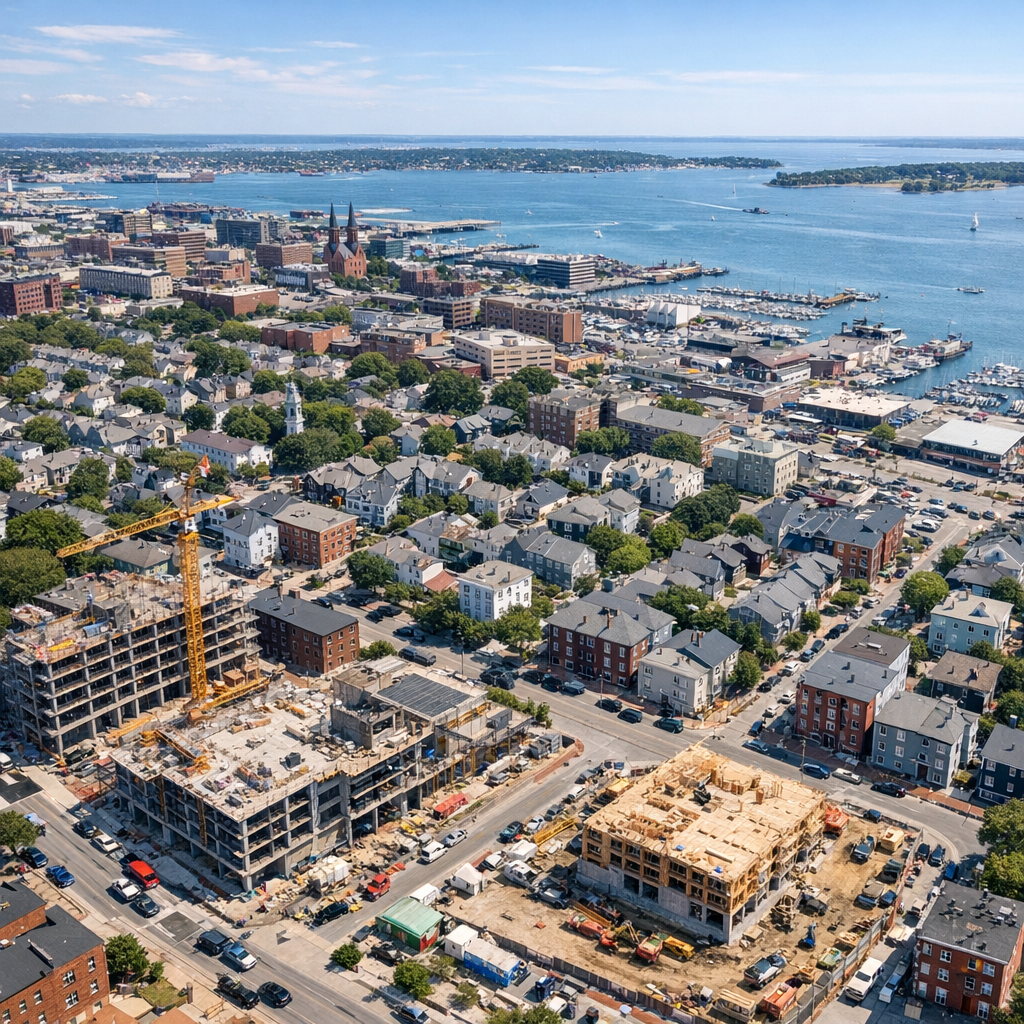
Portland’s housing market is experiencing significant transformations, influenced by various factors including economic conditions, development projects, and policy changes. Understanding these dynamics is crucial for residents and potential investors.
Market Trends
Recent data indicates a notable shift in Portland’s real estate landscape. In March 2026, the median sale price of homes reached $594,000, marking a 10.9% increase from the previous year. Homes are selling faster, with an average of 38 days on the market compared to 50 days last year. Additionally, the number of homes sold rose by 29.7%, with 48 transactions in March 2026 compared to 37 in the same month the previous year. This trend underscores a competitive market with rising property values. Source
Development Projects
Several significant development projects are underway, aiming to address housing demand and enhance community infrastructure:
89 Elm Apartments
Construction has commenced on a 201-unit affordable housing development in downtown Portland. Located within walking distance of essential amenities, 89 Elm Apartments will cater to households earning up to 60% of the area median income. The project includes a mix of studio, one-, and two-bedroom apartments, along with community spaces and support services. Source
Portland Foreside
This 10-acre revitalization project along Portland’s eastern waterfront is set to introduce 500 new homes, a public market, and extensive open spaces. The development aims to create a vibrant neighborhood with a mix of residential, commercial, and recreational areas, enhancing the city’s appeal. Source
Bayside Master Development Plan
Approved by the City of Portland’s Planning Board, this plan proposes over 800 new rental housing units, mixed-use community spaces, and increased green areas in the Bayside neighborhood. The project emphasizes public engagement and aims to foster a connected and sustainable community. Source
Policy and Housing Initiatives
Portland has been recognized for promoting “middle housing”—including duplexes, fourplexes, accessory dwelling units, and cottage clusters—to address its housing shortage. Since the 2021 adoption of the Residential Infill Project (RIP), which relaxed zoning laws to encourage denser development, around 23% of new homes (about 4,067 units) have been classified as middle housing. However, recent data indicates a sharp decline in overall housing construction, attributed to economic challenges such as high interest rates, inflation, tariffs, and restricted financing. Despite this slowdown, local realtors report ongoing demand for middle housing. Mayor Keith Wilson has set an ambitious goal of adding 20,000 housing units over the next eight years, with expectations that middle housing will play a central role in meeting this target. Source
Conclusion
Portland’s housing market is in a state of flux, characterized by rising prices, rapid sales, and ambitious development projects. While challenges persist, particularly in affordability and inventory, ongoing initiatives and community engagement offer promising avenues for growth and inclusivity in the city’s housing landscape.