

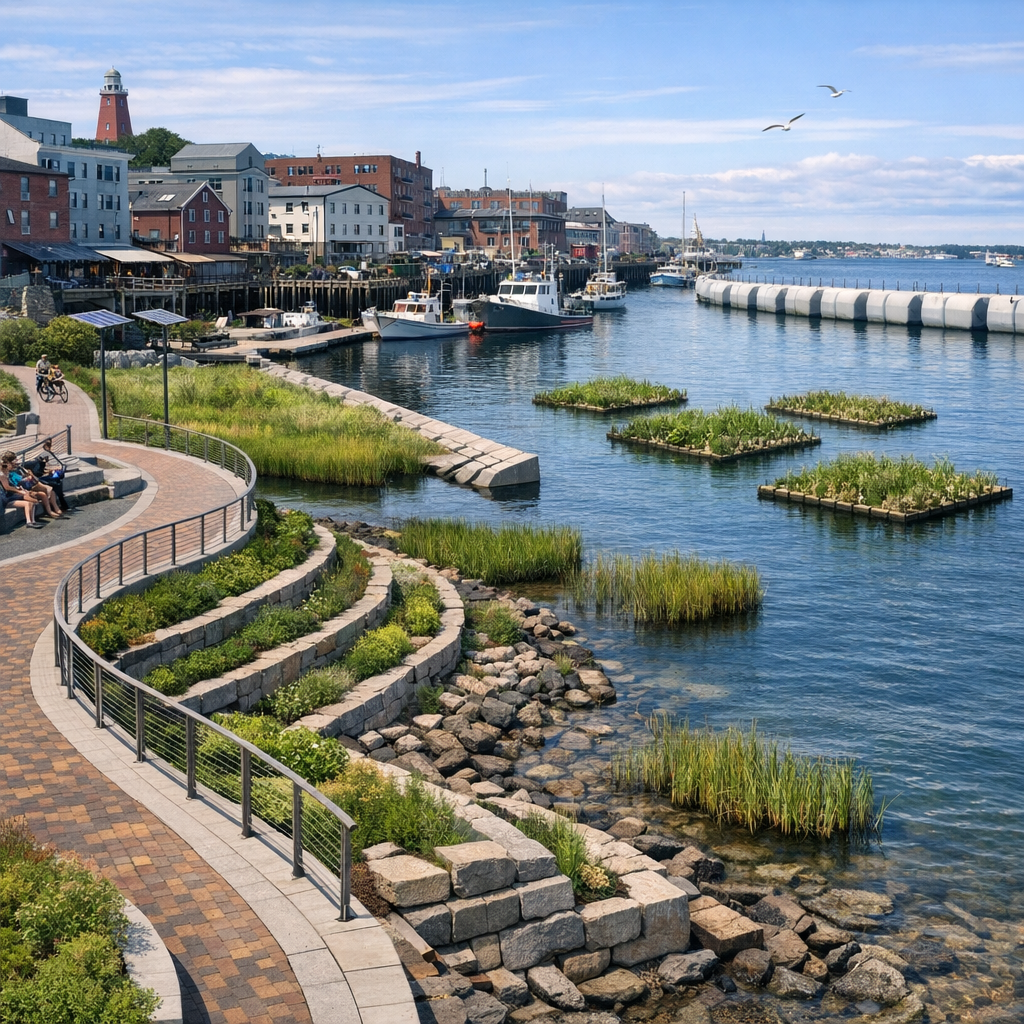
Portland, Maine, is actively confronting the challenges posed by climate change through a series of strategic initiatives aimed at enhancing the city’s resilience and sustainability.
Collaborative Efforts for Coastal Resilience
In December 2025, the City of Portland formalized a partnership with the Gulf of Maine Research Institute (GMRI) to bolster coastal resilience. This collaboration focuses on data sharing, joint grant applications, and protecting the working waterfront from sea-level rise. Mayor Mark Dion emphasized the importance of this alliance, stating, “By combining the City’s planning and policy work with GMRI’s scientific expertise, we’re creating practical solutions that protect our working waterfront, grow our economy, and prepare Portland for the future.”
Advancements in Port Electrification
The Maine Department of Transportation (MaineDOT) has initiated the Clean Ports Planning Project, targeting the electrification of operations at four Maine ports, including Portland. This project aims to assess current emissions and develop strategies to reduce pollution by converting port equipment and infrastructure to electric power. Community engagement is a key component, exploring how port electrification may shape Maine’s future workforce.
Progress in Climate Action Plans
Celebrating five years since the adoption of the One Climate Future plan, Portland and South Portland have made significant strides in climate action. Over 70% of the strategies outlined in the plan are now underway, demonstrating a strong commitment to reducing greenhouse gas emissions and building resilience against climate impacts.
Addressing Environmental Challenges
Despite these efforts, Portland faces ongoing environmental challenges. The city’s lobster industry has experienced a decline in catch for the fourth consecutive year, with the 2025 haul being the lowest since 2008. Factors contributing to this decline include increased operational costs and the effects of climate change, such as warming waters pushing lobsters into Canadian territories.
Additionally, Portland has seen an increase in extreme heat streaks, with the number of such events rising by about two per year compared to 1970. This trend underscores the urgent need for continued climate mitigation and adaptation efforts.
Looking Ahead
Portland’s proactive approach to climate resilience serves as a model for other coastal communities. Through strategic partnerships, infrastructure advancements, and comprehensive climate action plans, the city is working diligently to navigate the complexities of environmental change and safeguard its future.