

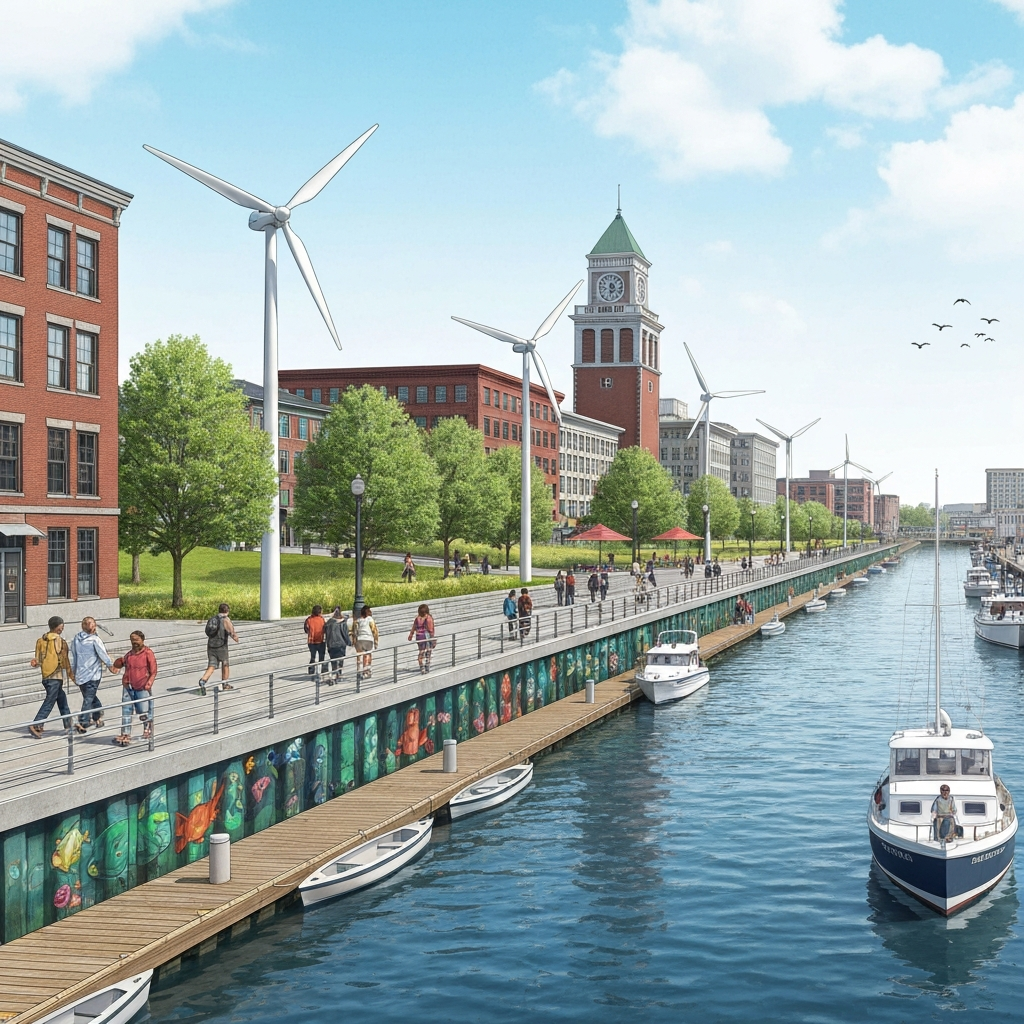
Portland, Maine, is actively confronting the challenges posed by climate change through a series of strategic initiatives aimed at enhancing the city’s resilience and sustainability.
Collaborative Efforts for Coastal Resilience
In December 2025, the City of Portland formalized a partnership with the Gulf of Maine Research Institute (GMRI) to bolster coastal resilience. This collaboration focuses on data sharing, joint grant applications, and protecting the working waterfront from sea-level rise. Mayor Mark Dion emphasized the importance of this alliance, stating, “By combining the City’s planning and policy work with GMRI’s scientific expertise, we’re creating practical solutions that protect our working waterfront, grow our economy, and prepare Portland for the future.” Source
Addressing Urban Heat Islands
Portland has experienced an increase in extreme heat events, with the number of heat streaks rising by about two per year since 1970. This trend underscores the need for urban planning strategies that mitigate heat island effects, such as expanding green spaces and utilizing reflective building materials. Source
Protecting Marine Ecosystems
The local lobster industry has faced declines, with the 2025 catch dropping to 78.8 million pounds, the lowest since 2008. Factors contributing to this decline include climate change-induced warming waters, which have led to lobsters migrating northward. This situation highlights the need for adaptive management strategies to sustain this vital industry. Source
Advancing Sustainable Infrastructure
The Maine Department of Transportation’s Clean Ports Planning Project is assessing the potential for port electrification in Portland and other Maine ports. This initiative aims to reduce emissions and promote sustainable port operations, aligning with broader environmental goals. Source
Through these concerted efforts, Portland is demonstrating a commitment to addressing climate change and fostering a sustainable future for its residents and industries.