

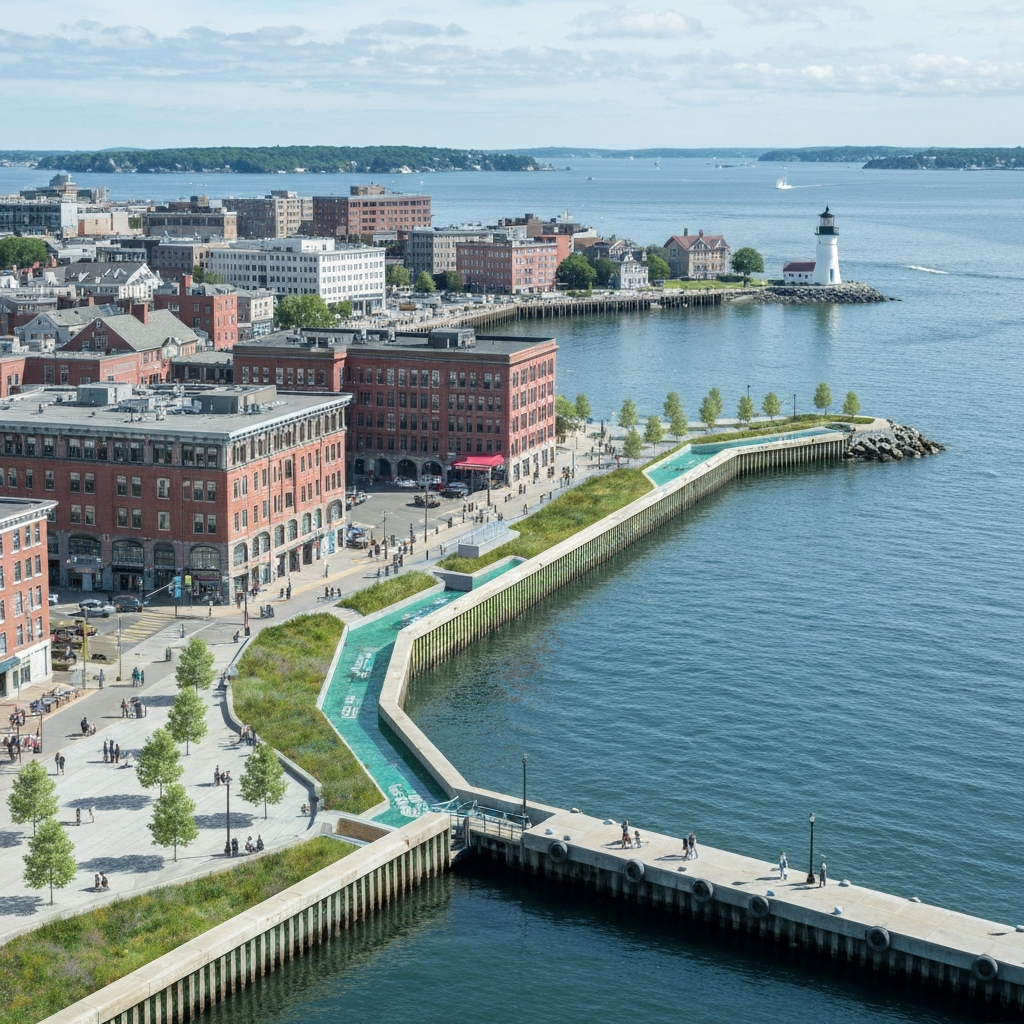
Portland, Maine, is proactively addressing the multifaceted challenges posed by climate change. The city has experienced notable environmental shifts, including increased extreme heat events and rising sea levels, necessitating comprehensive strategies to bolster resilience and sustainability.
Rising Temperatures and Heat Events
Recent analyses indicate a significant uptick in extreme heat streaks in Portland. Between 1970 and 2024, the city has seen an average increase of two such events per year. These streaks, defined as three or more consecutive days with temperatures exceeding the 90th percentile of historical maximums, pose health risks, particularly to vulnerable populations. The prevalence of urban heat islands, where infrastructure absorbs and retains heat, exacerbates this issue, affecting over 70% of residents with temperatures feeling at least 8°F higher than surrounding areas.
Sea Level Rise and Coastal Vulnerability
Portland’s coastal location makes it susceptible to sea level rise. The Maine Climate Plan projects an additional 1.5 feet of sea level rise by 2050 and four feet by 2100. Such changes threaten infrastructure, natural habitats, and the local economy, emphasizing the need for adaptive measures.
Collaborative Climate Initiatives
In response, Portland has forged strategic partnerships to enhance climate resilience. In December 2025, the city formalized a collaboration with the Gulf of Maine Research Institute. This partnership focuses on data sharing, joint grant applications, and initiatives aimed at protecting the working waterfront and achieving sustainability goals like electrification.
Additionally, the “One Climate Future” plan, a joint effort between Portland and South Portland, outlines a roadmap for a low-carbon future. This comprehensive plan addresses vulnerabilities across infrastructural, social, environmental, and economic systems, emphasizing community engagement and actionable strategies.
Port Electrification and Emission Reduction
The Maine Department of Transportation’s Clean Ports Planning Project is another significant endeavor. This initiative assesses emissions at key ports, including Portland, and explores strategies for pollution reduction and infrastructure electrification. The project aims to create actionable roadmaps for port electrification, contributing to statewide sustainability efforts.
Community Engagement and Sustainability
Local businesses and organizations are also contributing to Portland’s environmental stewardship. For instance, Allagash Brewing Company has integrated sustainability into its operations by installing over 600 solar panels, achieving efficient water usage, and diverting 98% of its waste from landfills through composting and recycling.
Portland’s proactive approach to climate resilience, characterized by strategic partnerships and community engagement, positions the city as a leader in addressing environmental challenges. Through continued collaboration and innovative initiatives, Portland aims to navigate the complexities of climate change and foster a sustainable future for its residents.